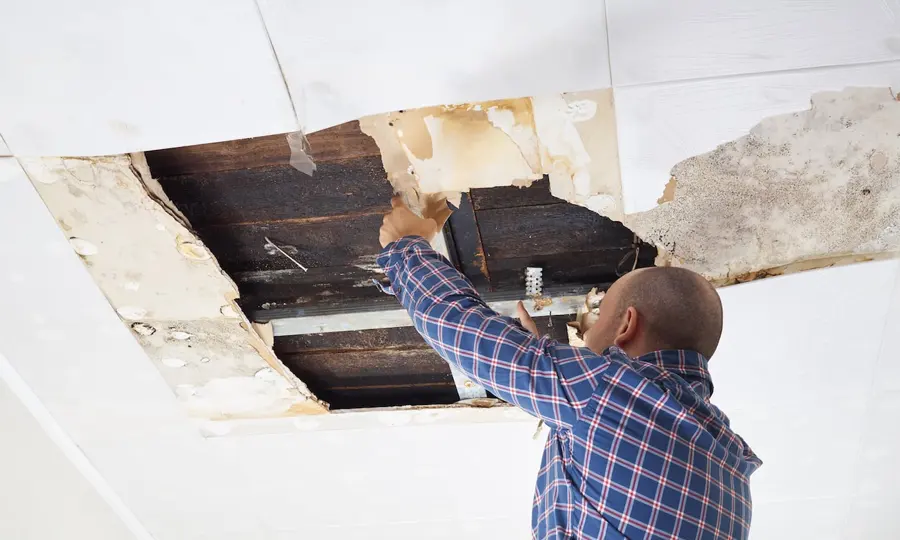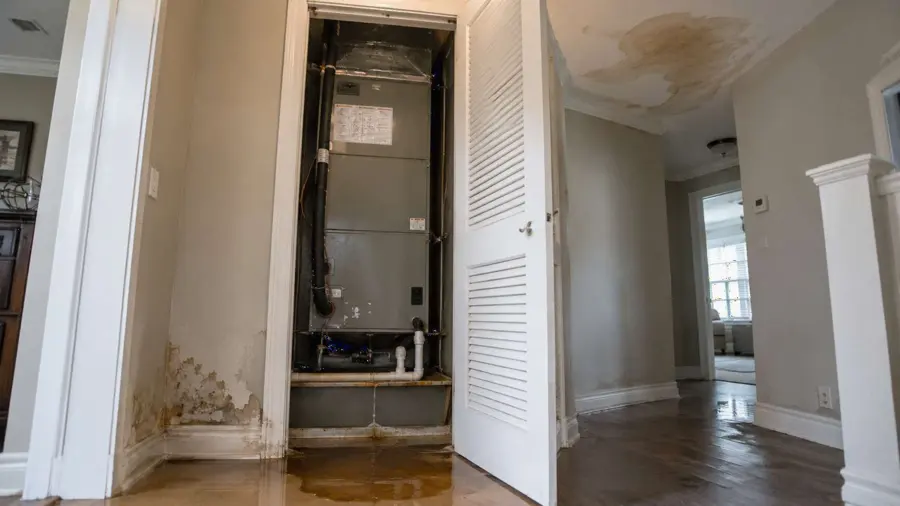
Fairfield summers are hot, with long runs of 90 and 100 degree afternoons, especially on the east side toward Travis. Air conditioners run for hours, and every hour they pull water out of the air. In many two-story homes built in the 1990s and 2000s, the furnace and air handler sit in the attic, directly above bedrooms and hallways. When that water cannot drain, it overflows into the ceiling.
Why condensate leaks happen
- Algae and debris clog the condensate drain line.
- The secondary drain pan under the air handler rusts or cracks.
- No float switch, or a float switch that stuck, so the system keeps running while the pan overflows.
- A frozen evaporator coil that melts all at once when the system shuts off.
- A condensate pump that fails in a closet or garage installation.
How condensate water damage gets dried
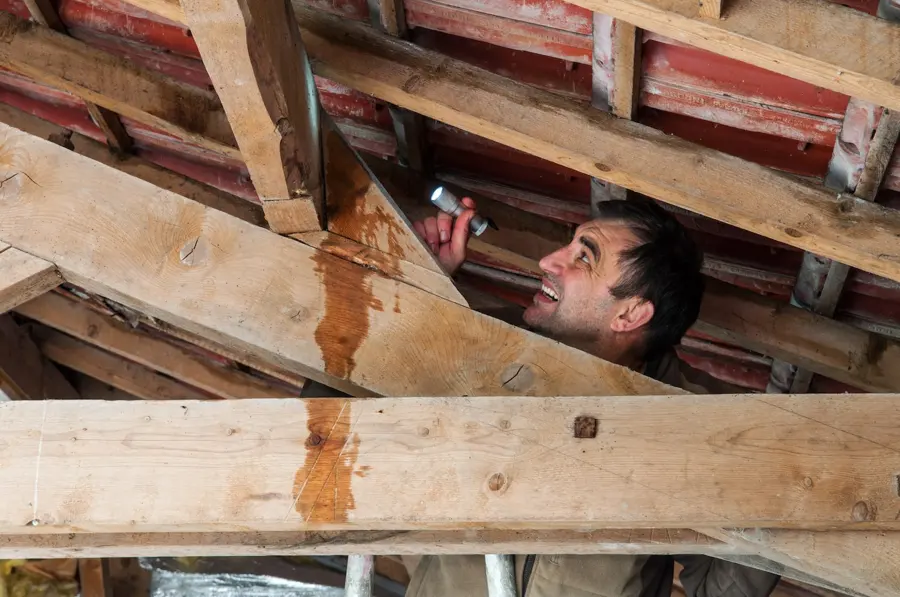
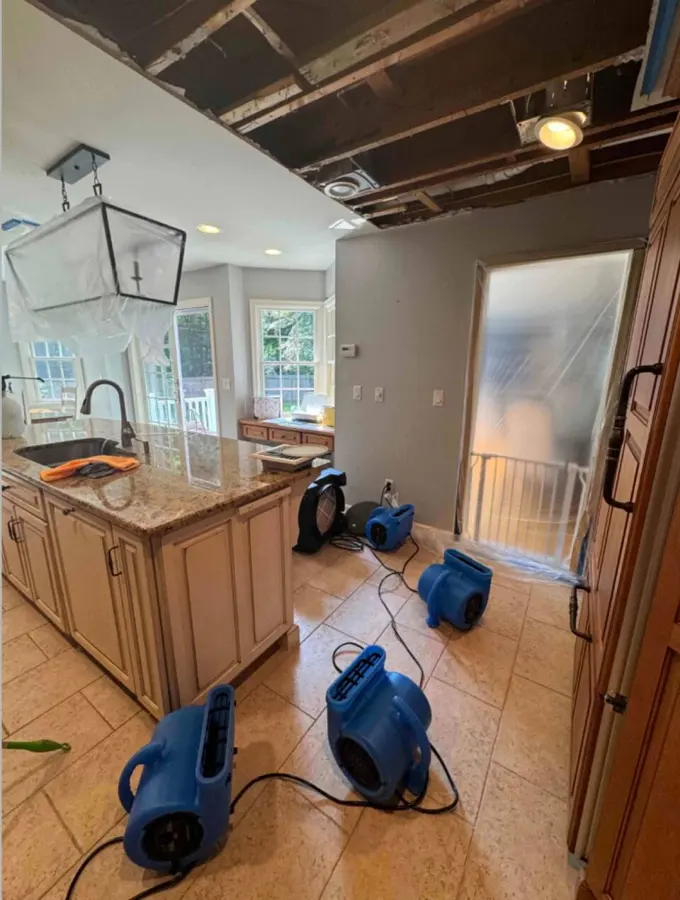
An HVAC technician clears the drain and fixes the pan or switch. The restoration team handles the water: the tech who does the walkthrough checks the attic floor, insulation and ceiling drywall with a moisture meter and thermal imaging. Wet insulation around the air handler is removed, sagging drywall comes down, and the drying team runs air movers and a dehumidifier in the attic and the room below until the readings reach the drying goal.
Condensate starts as clean water, but it collects in a warm, dark attic. The longer it sits, the more likely it is to need antimicrobial treatment before the ceiling is closed.
Preventing the next one
A yearly drain flush, a float switch on the pan and a quick look at the pan at the start of summer prevent most condensate floods. The Department of Energy covers air conditioner maintenance basics, and the EPA explains why indoor moisture needs to dry fast.