Fairfield sits in the Cordelia gap, where the Delta breeze funnels between the hills. In winter storms that same wind drives rain sideways into roofs that shed vertical rain just fine. Worn flashing, cracked tiles on two-story homes in Rancho Solano and Paradise Valley, and aging composition roofs on older homes all let water in when the wind blows hard enough.
Where roof water gets in
- Flashing at chimneys, skylights and wall-to-roof joints.
- Roof vents and turbines where wind pushes rain past the collar.
- Cracked or slipped concrete and clay tiles on hillside homes.
- Valleys and eaves where gutters overflow in heavy rain.
- Worn shingles and underlayment on older roofs.
How roof leak damage is handled
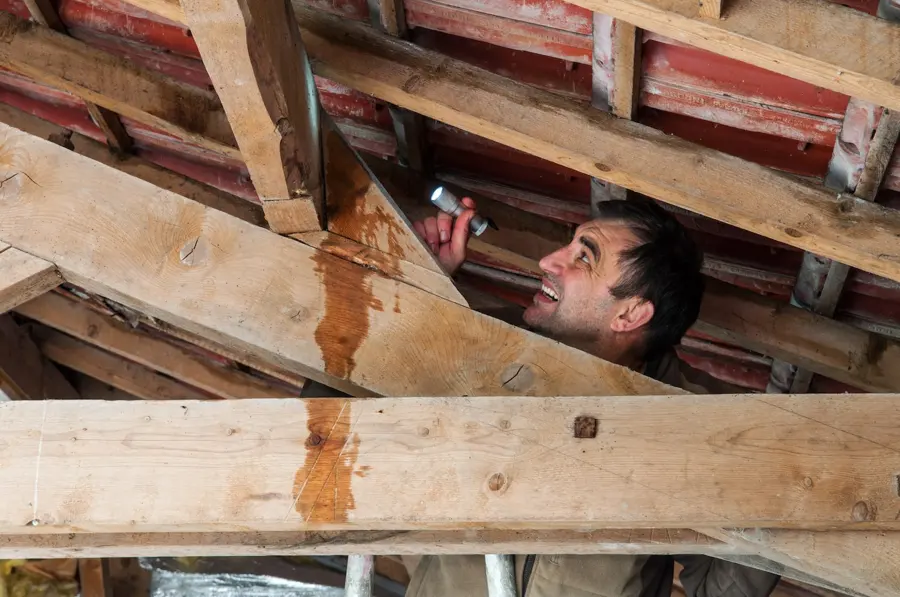
The first job is to stop more water. The response team tarps the damaged section of the roof or covers the vent until the roofer can make a permanent repair. Inside, the tech who does the walkthrough follows the water from the stain back through the attic with a flashlight, a moisture meter and thermal imaging, because water often runs along rafters and lands several feet from where it entered.
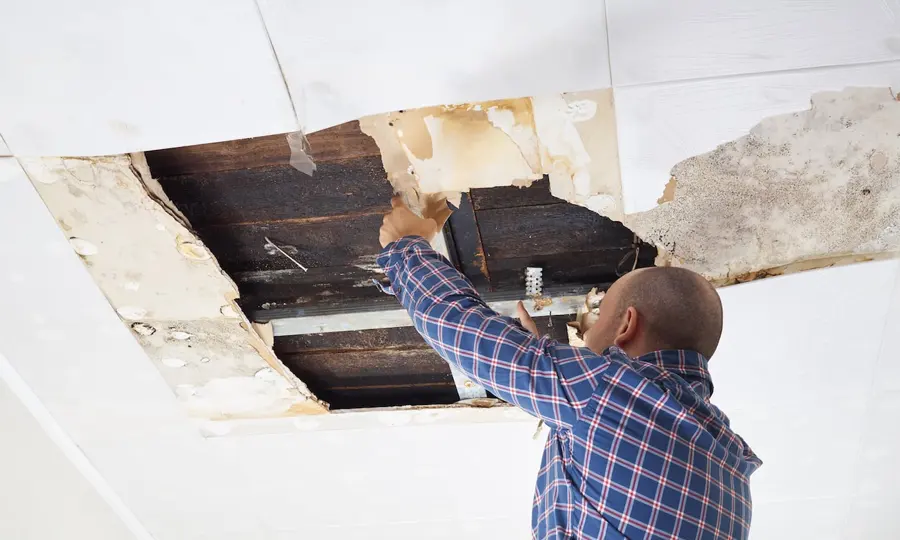
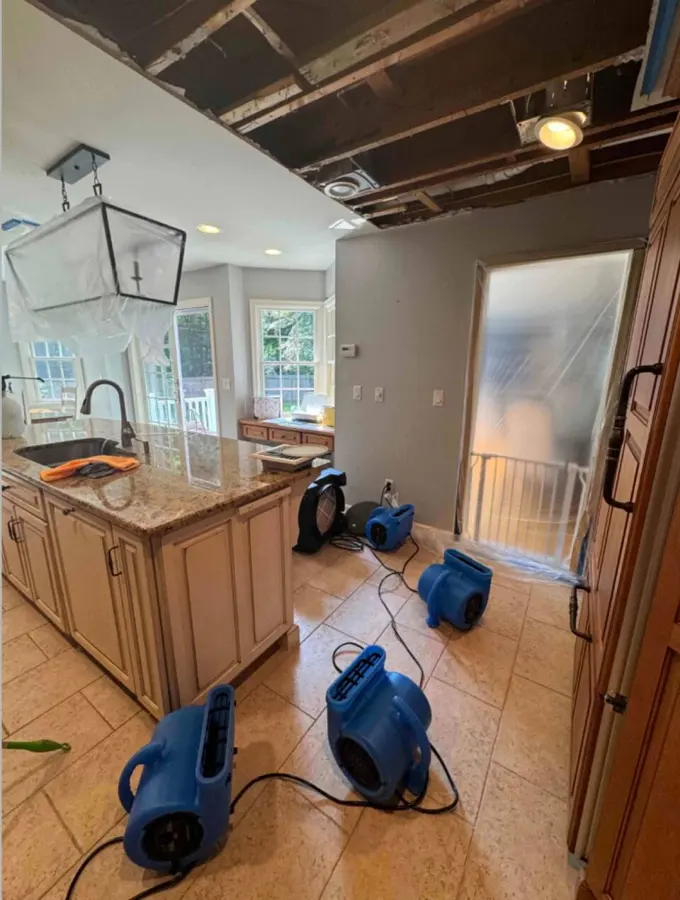
Soaked blown-in or batt insulation is bagged and removed, since compressed wet insulation stops insulating and holds water against the drywall. Wet ceiling drywall that is sagging comes down. Then the drying team places air movers and a dehumidifier in the attic and the rooms below and logs readings on the framing and ceilings every day.
After the storm
Ceilings get closed and insulation replaced only after the framing is dry. Closing a wet attic traps moisture right above the living space.
The National Weather Service explains flood and heavy rain safety, and Ready.gov covers how to prepare a home before winter storms.