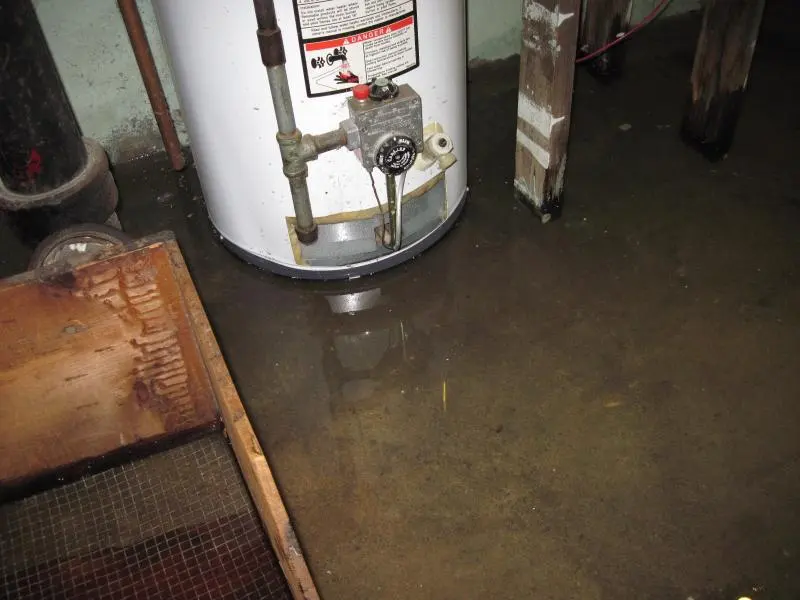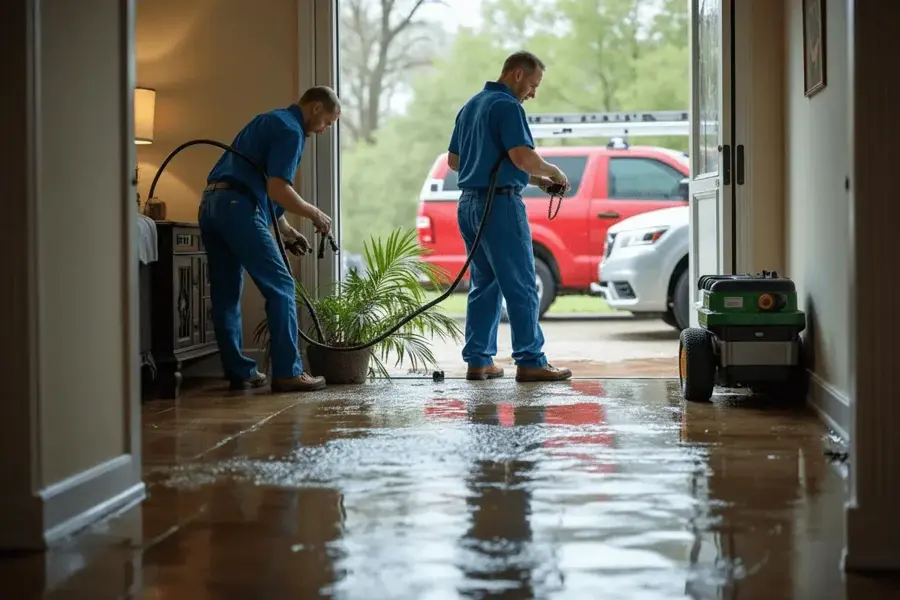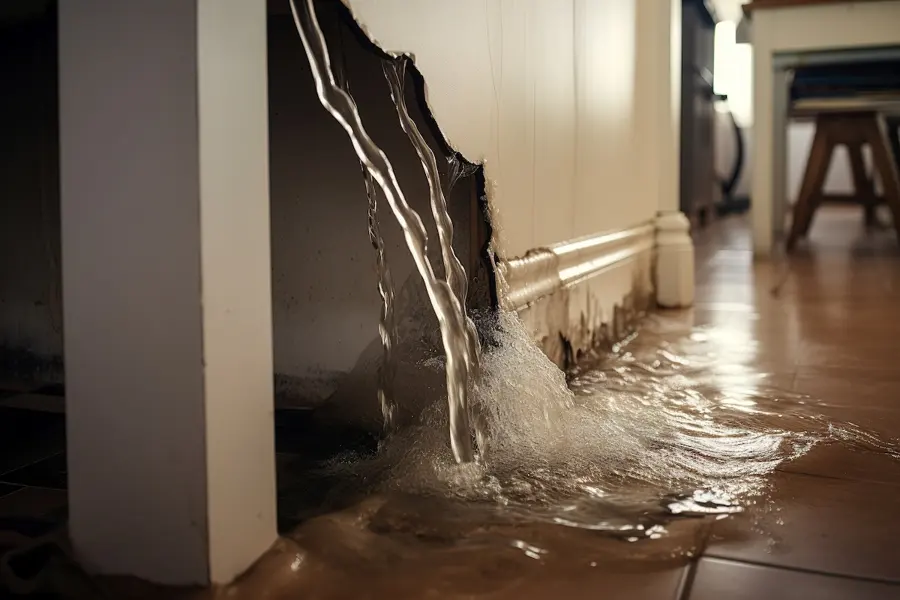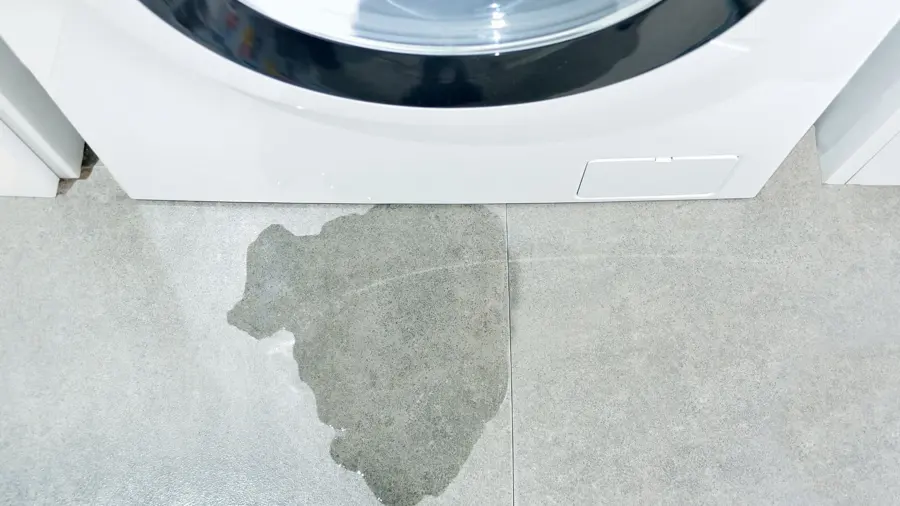
Appliance leaks are among the most common water losses in Fairfield homes, and they rarely look serious at first. A washer hose weeps behind the machine, a dishwasher drain lets go under the cabinet, or a refrigerator ice maker line cracks behind the fridge. By the time the floor looks wet, water has often traveled under laminate, into the base cabinets and down into the subfloor.
The usual suspects
- Rubber washing machine fill hoses that burst or split with age.
- Washer drain hoses that pop out of the standpipe during the spin cycle.
- Dishwasher supply, drain and door gasket leaks under the counter.
- Refrigerator ice maker and water dispenser lines, often thin plastic tubing.
- Kitchen sink supply lines and garbage disposal seals.
How appliance leak damage gets dried
The extraction crew removes standing water first and the tech who does the walkthrough maps the wet area with a pinless meter and thermal imaging, including inside the cabinets and under the flooring nearby. Toe kicks under the base cabinets come off so air can reach the space beneath. Wet cabinet backs and bottoms can often be dried in place with directed air.
Laminate and vinyl plank that trapped water usually come up. The drying team then runs air movers and LGR dehumidifiers and logs daily readings until cabinets, subfloor and walls reach the drying goal. Water from a dishwasher drain or washer drain is Category 2 gray water, so affected materials are cleaned and treated before drying.
Stopping the next leak
Braided stainless steel washer hoses, a leak sensor behind the washer and under the sink, and a look at the fridge line when the fridge moves prevent most of these. The EPA WaterSense program lists simple household leak checks, and the Consumer Product Safety Commission posts appliance recalls.