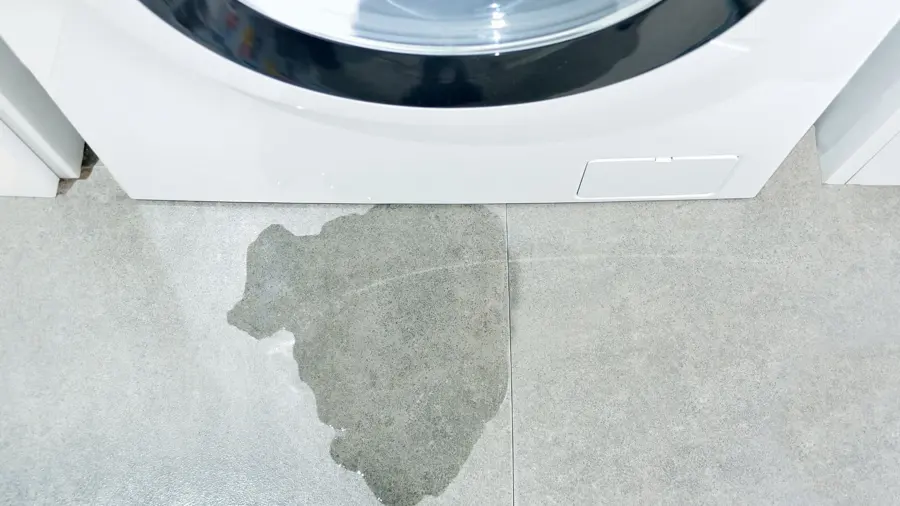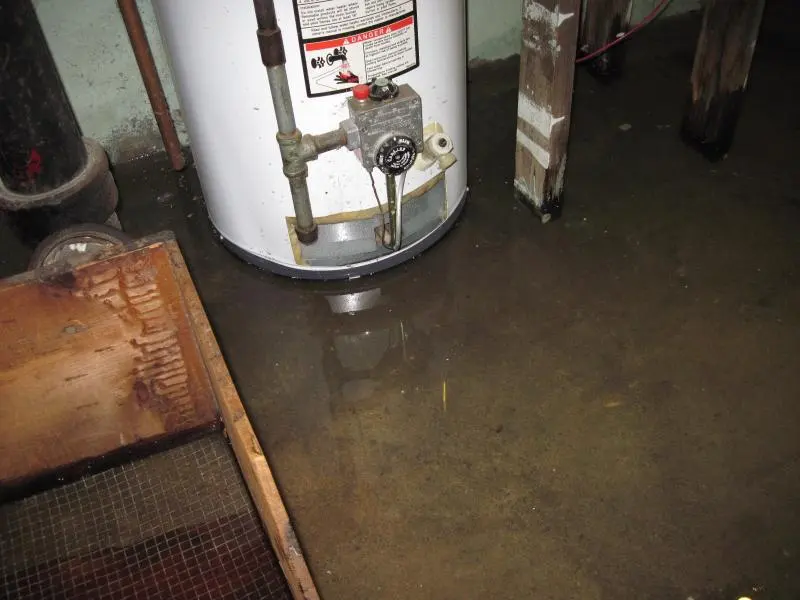
In most Fairfield tract homes the water heater sits in the garage on a raised platform; in some older homes and condos it is in a hall or laundry closet inside the living space. Either way, a failed tank or fitting can put a lot of water on the floor fast, and a closet install sends it straight under hallway flooring and into bedrooms.
How water heaters fail
- The tank rusts through from the inside after years of sediment build-up.
- The temperature and pressure relief valve opens or leaks.
- Supply connectors or the drain valve at the bottom fail.
- An earthquake strap is missing and the tank shifts, stressing the lines.
What the cleanup involves
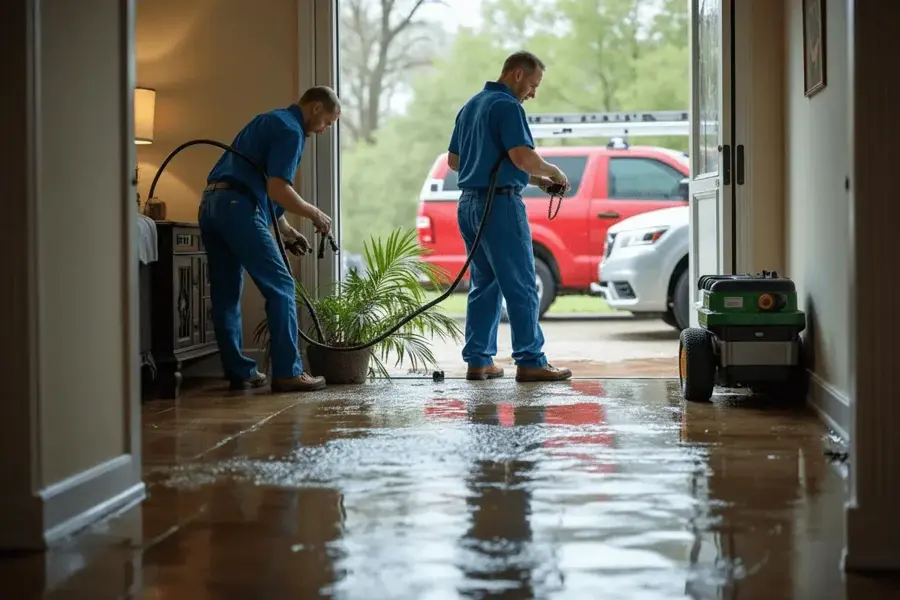
After the water and power or gas to the tank are shut off, the extraction crew removes standing water from the garage or closet and any rooms it reached. In a garage, the concern is the shared wall with the house: water on the slab wicks into the bottom of that drywall and the framing behind it. In a closet install, water runs under laminate, vinyl plank or carpet into the hallway and bedrooms.
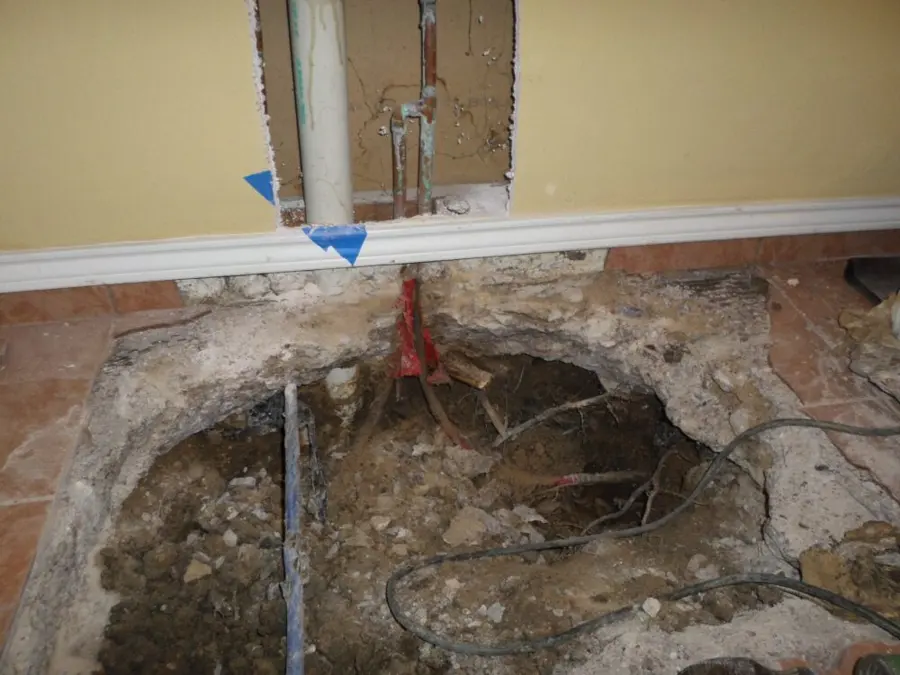
The tech who does the walkthrough maps the wet area with meters, then the drying team removes baseboards, opens small holes or flood cuts wet drywall as needed, and sets air movers and LGR dehumidifiers. Readings are logged daily until the materials reach the drying goal. Water from a tank is usually clean Category 1, but sediment and time can change that.
Replacing the tank
A plumber replaces the heater, ideally with a drain pan and a leak sensor. The Department of Energy explains water heater types and maintenance, and the EPA WaterSense program covers household leak checks.