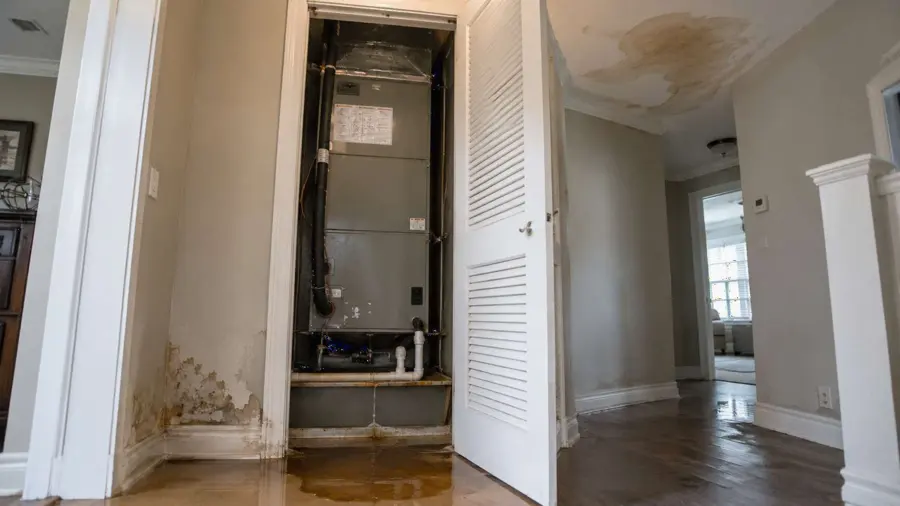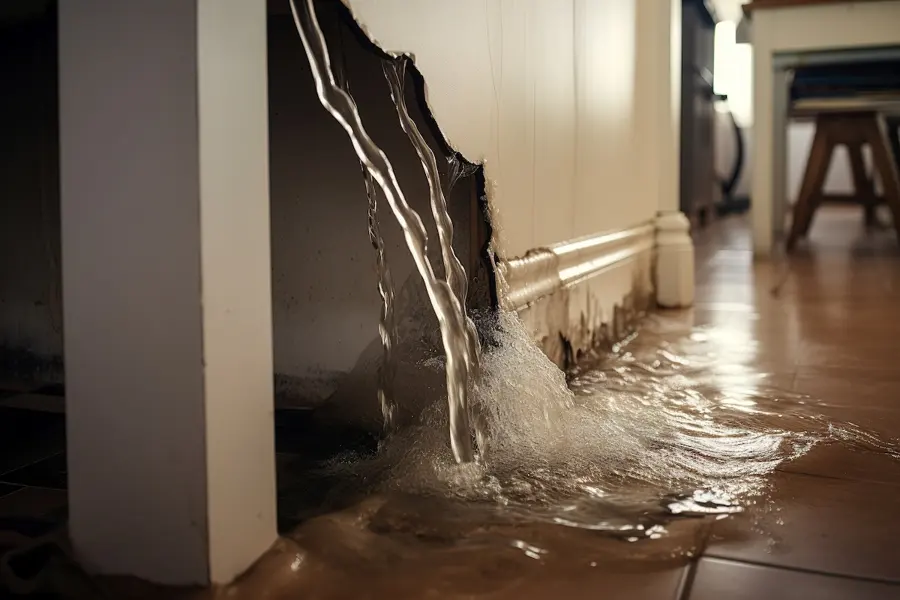
Two-story homes are the norm in much of Fairfield built after the 1980s, from Rancho Solano and Paradise Valley to Cordelia and the newer streets off Vanden Road. That puts bathrooms, laundry rooms and plumbing runs right above living rooms and kitchens. When something fails upstairs, the ceiling below is where it shows.
This page covers leaks from inside the house. If the water came through the roof, see roof leak water damage, and if it came from the attic air handler, see AC condensate leak damage.
Common sources of a ceiling leak
- A failed wax ring or supply line on an upstairs toilet.
- Shower pans, tub drains and grout that let water into the subfloor.
- A washing machine on the second floor.
- Supply lines running through the ceiling to upstairs fixtures.
How a ceiling leak is dried
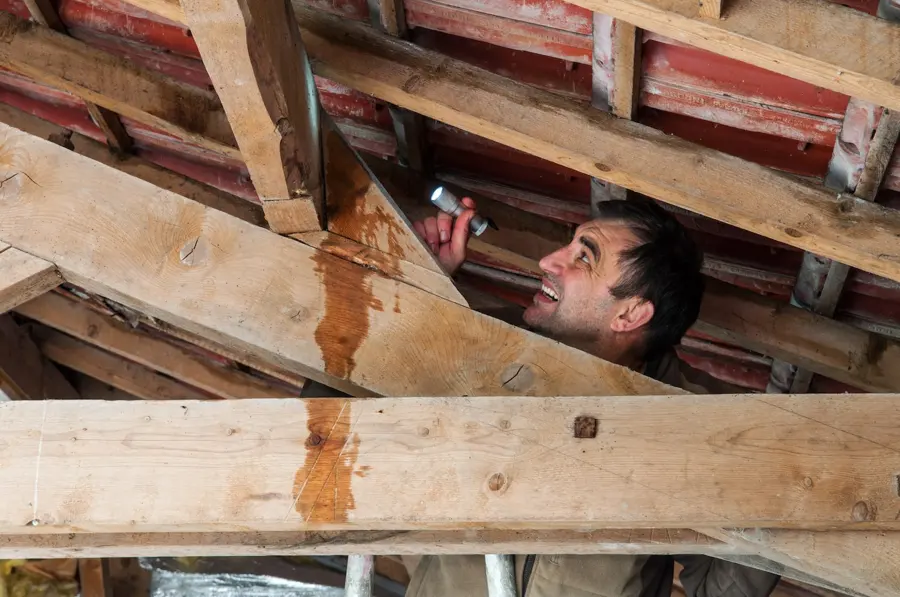
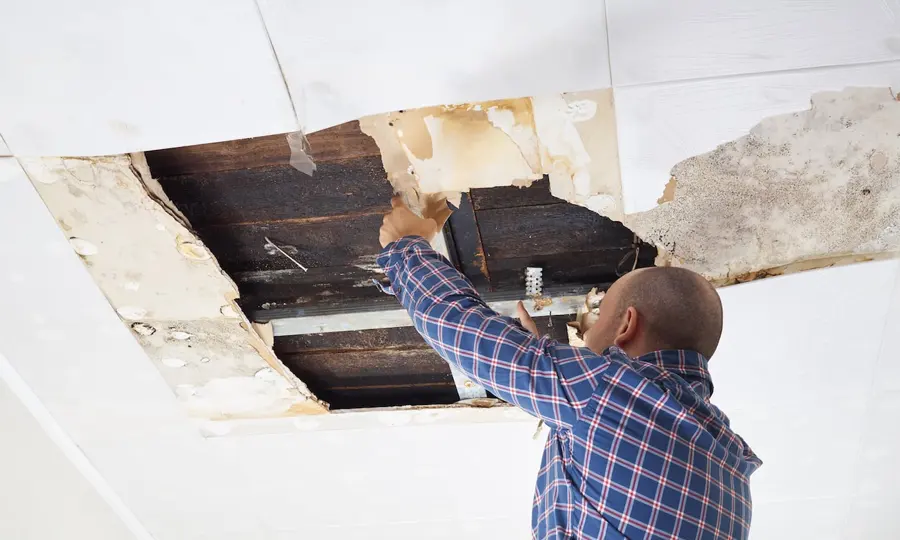
The response team starts with safety: power off to any wet light fixture or fan, and a controlled opening if the ceiling is bulging, so it drains into a container instead of collapsing. Thermal imaging shows how far the water spread above the drywall, often well past the visible stain.
Saturated or sagging drywall is cut out, and wet insulation above it is removed. Damp but sound drywall can often be dried in place. The drying team works both sides: air movers and a dehumidifier below, and drying of the subfloor and bathroom floor above. If the source was a toilet, the water is treated as contaminated and the cavity gets an antimicrobial.
Closing the ceiling
New drywall goes up only after the joists and subfloor read dry. Painting over a damp ceiling brings the stain right back.
The EPA WaterSense program shows how to check toilets and fixtures for leaks, and the EPA moisture brief explains why wet ceilings should dry fast.