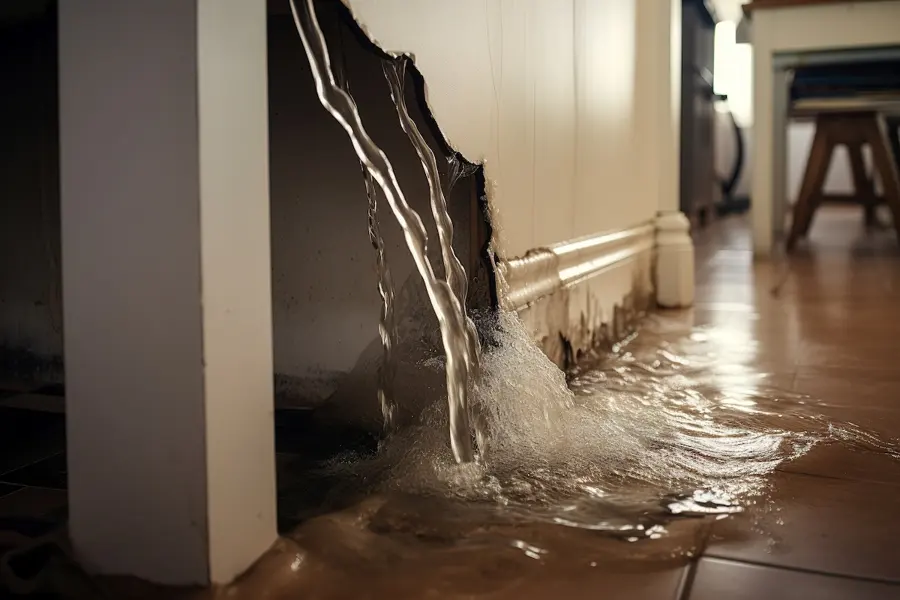
Every gallon the extraction crew pulls out as liquid is a gallon the drying equipment never has to evaporate. That is why extraction comes first on almost every water loss in Fairfield, from a laundry hose failure in Paradise Valley to storm water pushed through a slider in Cordelia.
Why extraction speed matters in Fairfield homes
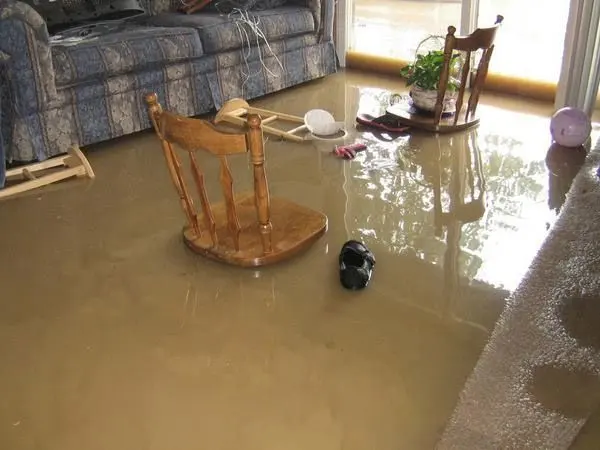
Most homes in central and east Fairfield are slab-on-grade with carpet, laminate or vinyl plank laid over the concrete. Water spreads under the flooring fast and the slab holds it. In the older homes near Texas Street, water can also drop through the floor into the crawl space below. The longer it sits, the more material has to come out.
- Drywall wicks water upward, often 12 inches or more above the waterline.
- Laminate and engineered flooring swell at the seams once water gets under them.
- Clean water from a supply line picks up contaminants from carpet and soil and can become Category 2.
- Mold can start growing in 24 to 48 hours on wet organic material.
How the extraction crew works a flooded room
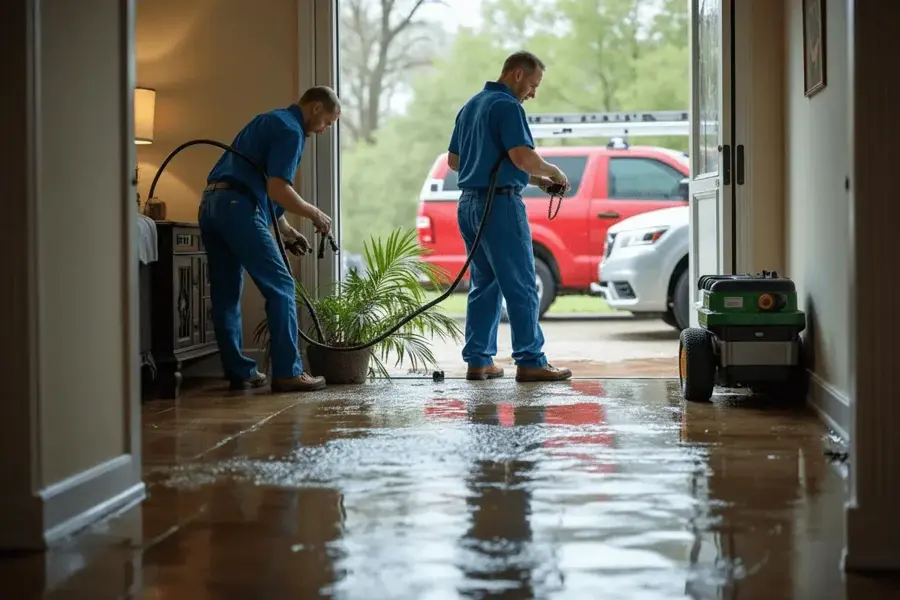
The tech who does the walkthrough maps the wet area first, using a pinless meter and thermal imaging to find how far the water traveled under walls and cabinets. Then the extraction crew runs truck-mounted extraction: the pump and the tank stay on the truck, so the water leaves the house instead of getting moved into a bucket in the next room.
On carpet, weighted extraction tools press water out of the pad. On hard floors, squeegees and wands pull water off the surface and out of grout lines. Where water ran under cabinets or behind baseboards, the crew opens small access points so air can reach the cavity.
After the water is out: drying to a number
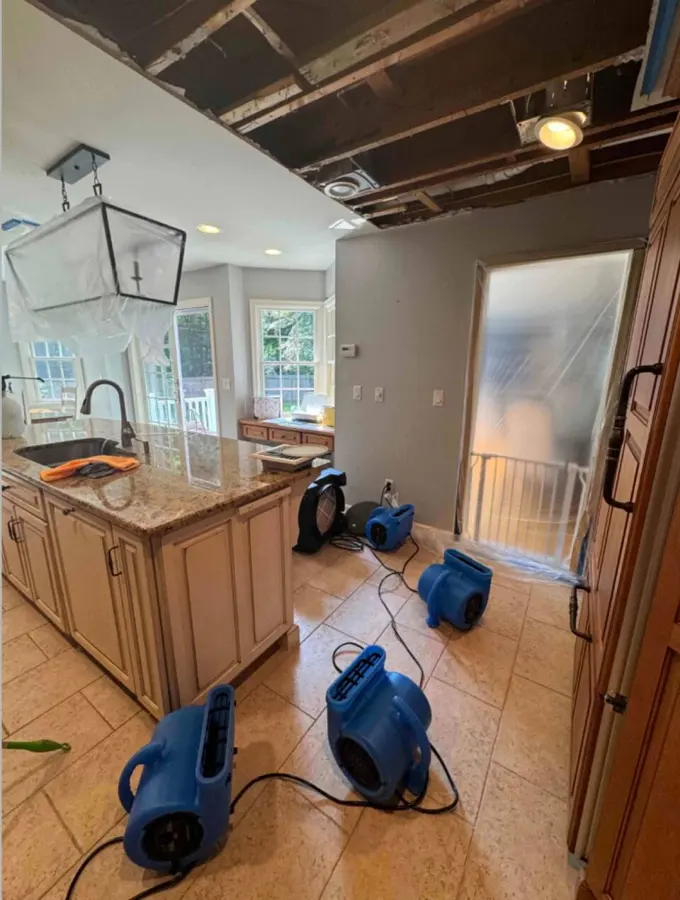
Extraction ends when the readings say it is done, not when the floor looks dry. Then the drying team sets air movers at the evaporation load of each room and runs LGR dehumidifiers to pull the moisture back out of the air. Readings are logged every day until materials sit within 2 to 4 points of a dry reference in an unaffected part of the house.
The EPA explains why fast drying matters in its brief on mold, moisture and your home. If the water came from outside, Ready.gov flood safety covers the steps to take before you go back into a flooded room.