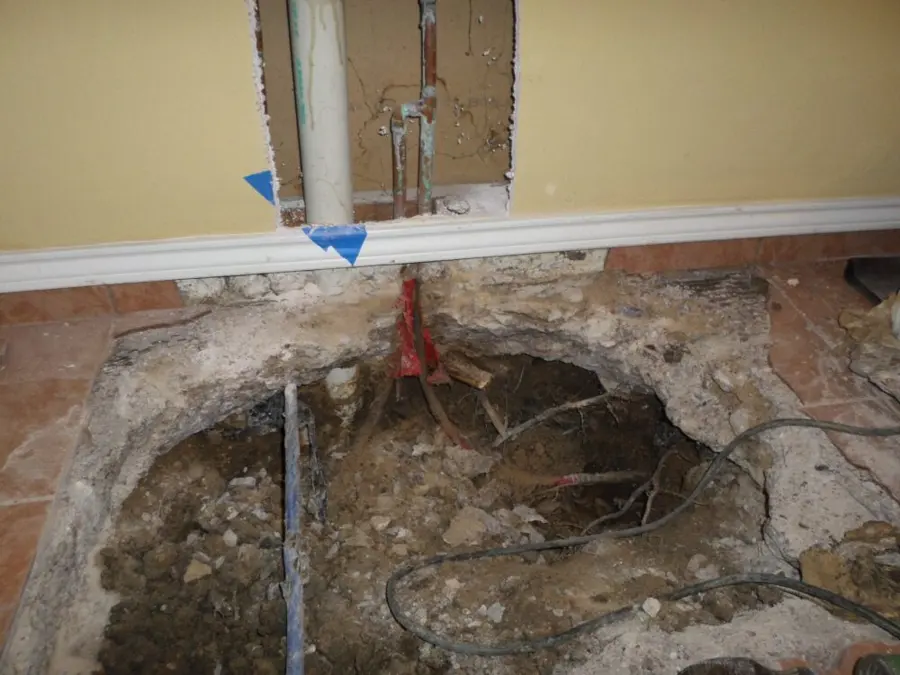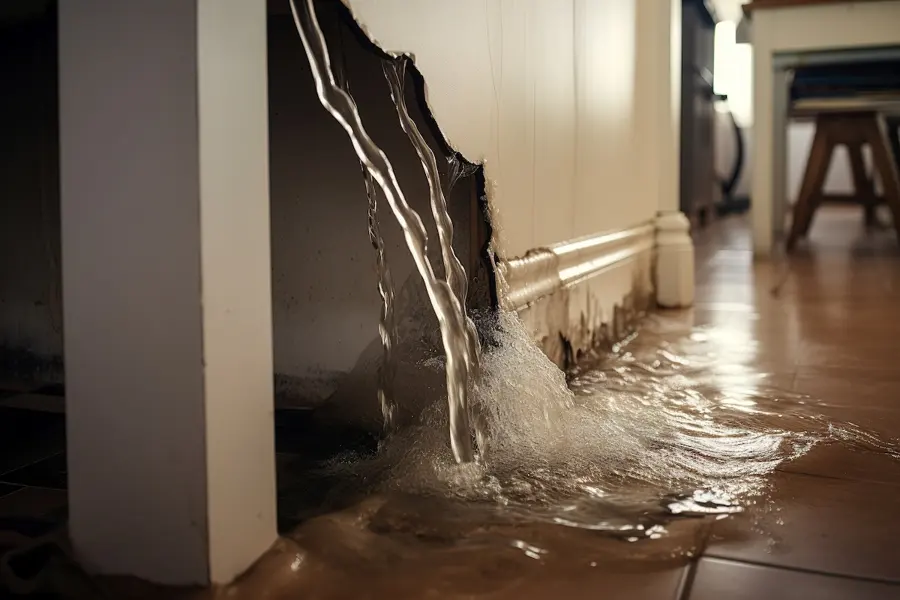
Fairfield does not see many hard freezes, so most burst pipes here are not frozen pipes. They are aging fittings, corroded galvanized lines in older homes near downtown, pinholes in copper, and failed PEX connections or water hammer in newer builds.
Where pipes fail in Fairfield homes
- Galvanized steel in homes built before the 1960s around Texas Street and the older core, rusting from the inside.
- Copper lines in 1970s and 1980s tract homes that develop pinholes after decades of use.
- Supply lines inside exterior walls and in the attic of two-story homes in Rancho Solano and Paradise Valley.
- Hose bibs and irrigation connections that leak back into the wall.
- Polybutylene gray pipe in some homes built between the late 1970s and mid 1990s.
How burst pipe damage gets dried
After the plumber stops the leak, the extraction crew pulls standing water off the floor. The tech who does the walkthrough then uses thermal imaging and pinless meters to trace the water inside the wall, under cabinets and through the ceiling below on two-story homes.
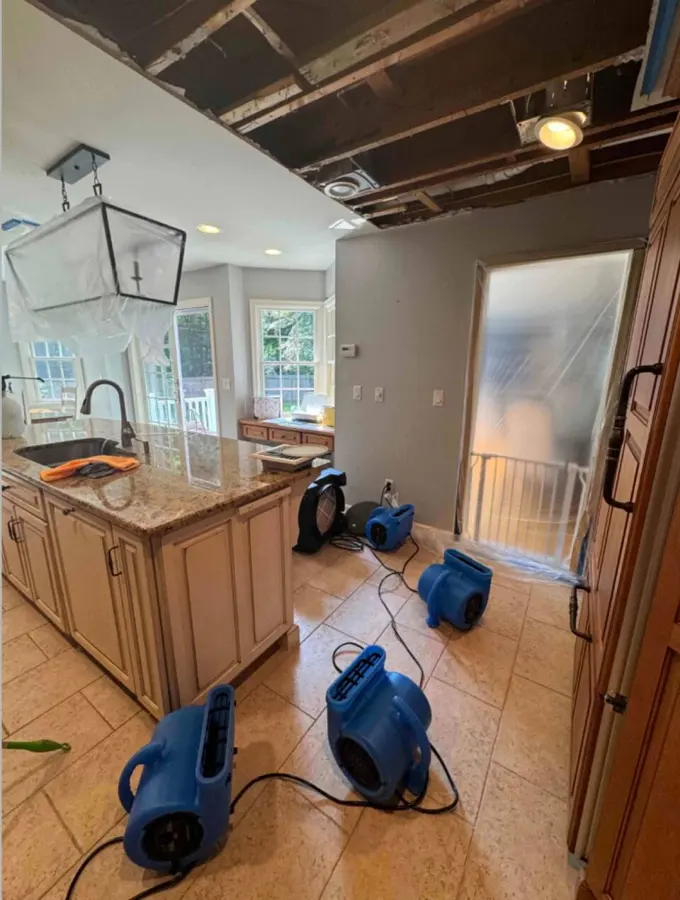
Where the drywall is only damp, the drying team drills small holes at the base of the wall and pushes dry air into the cavity. Where the drywall is saturated or swollen, a flood cut removes the bottom section so the framing can dry. Air movers and LGR dehumidifiers run until the readings reach the drying goal.
Why a two-story leak needs both floors checked
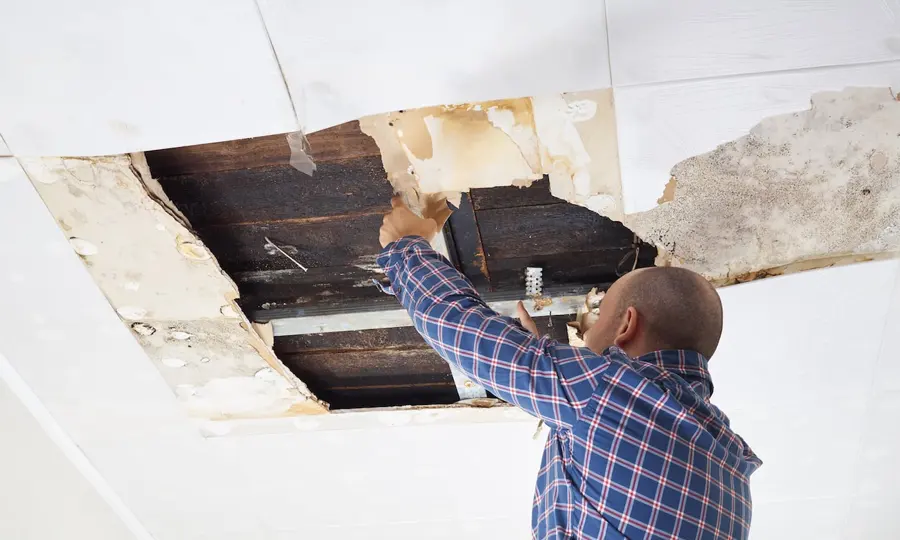
On the second floor, a burst line soaks the subfloor and then the ceiling drywall below. Water follows joists and can show up one room over from the actual leak. The mitigation team checks the ceiling cavity from below and the subfloor from above before calling any area dry.
To catch small leaks before they burst, the EPA WaterSense program explains how to find and fix household leaks. The City of Fairfield posts local water service information at fairfield.ca.gov.