Fairfield has a busy commercial side: retail along North Texas Street and around the regional mall, offices and medical suites near the civic center and the hospital area, restaurants downtown, and warehouses and light industry near I-80, Cordelia Road and the business parks on the east side. Water losses in these buildings are bigger, and the clock matters more.
Common commercial water losses
- Fire sprinkler line breaks and accidental sprinkler discharge.
- Roof drains and flat roofs overflowing in heavy storms.
- Restroom supply and toilet overflows in multi-tenant buildings.
- Rooftop HVAC condensate and water heater failures.
- Storm water entering loading docks and ground-floor suites.
How commercial drying is run
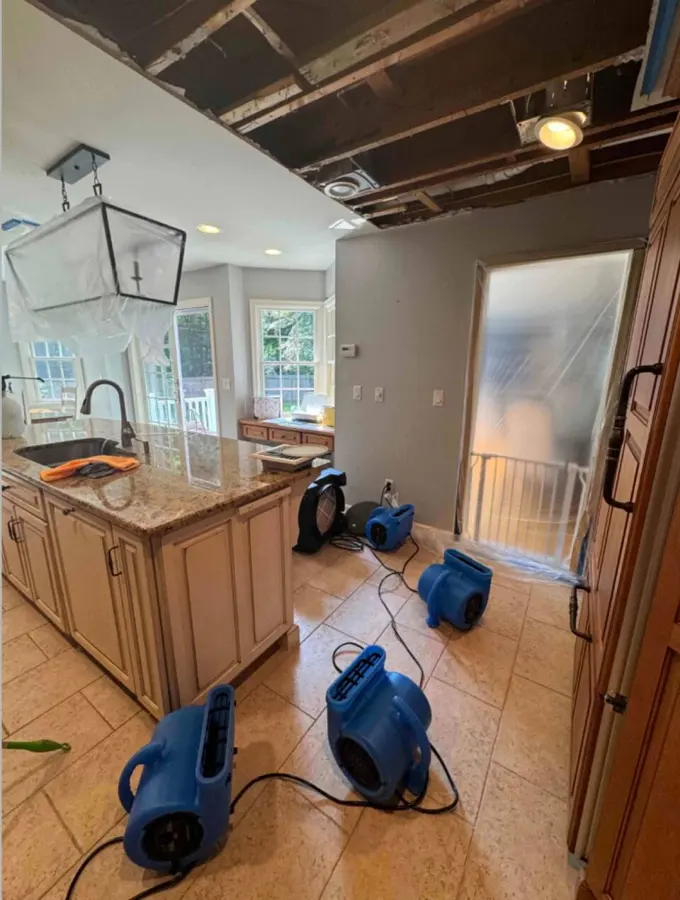
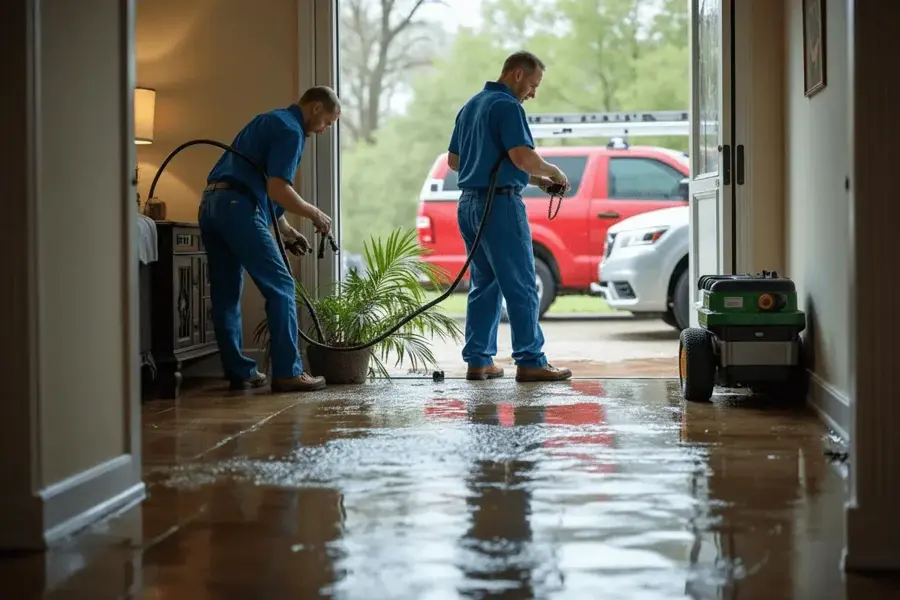
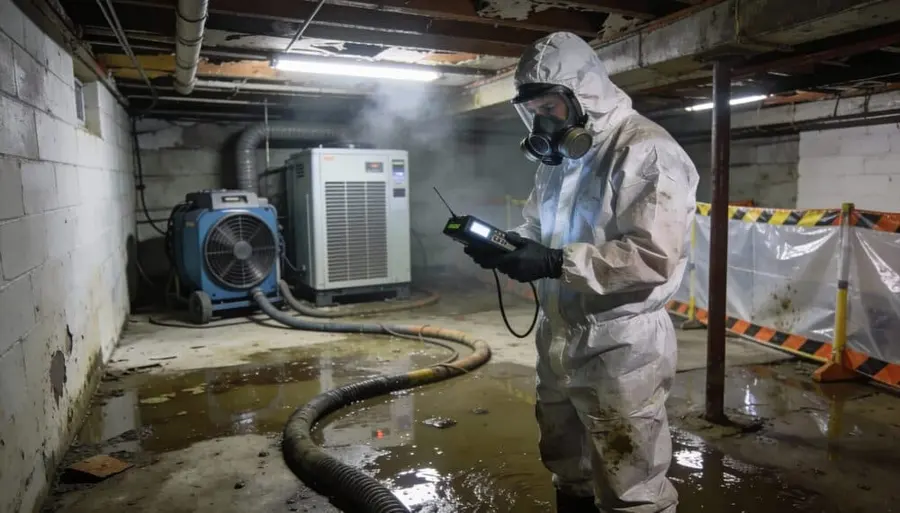
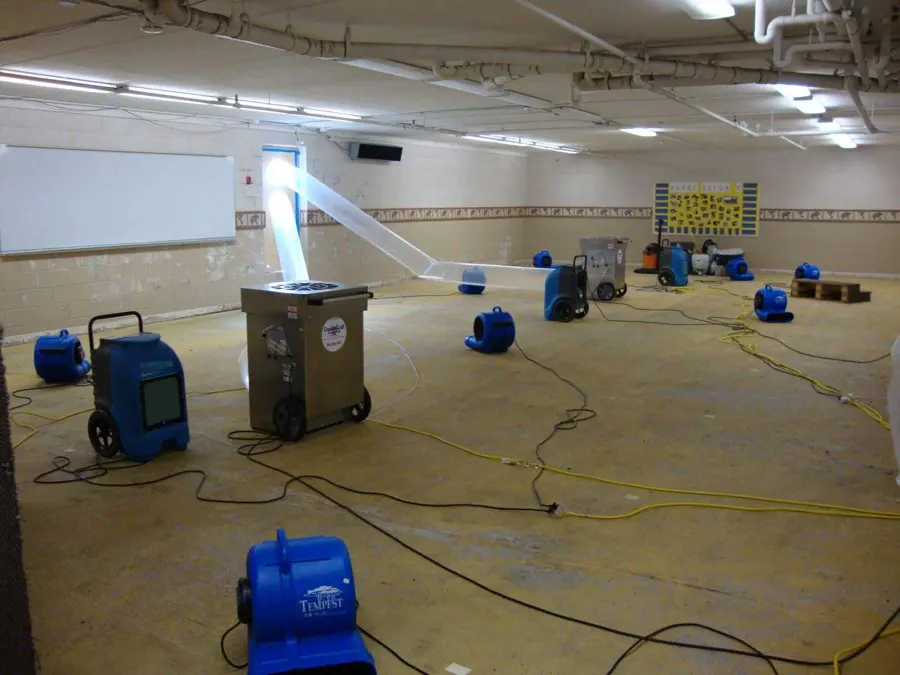
The response team meets the owner or property manager, sets priorities, and maps moisture across the affected suites. The extraction crew removes standing water with truck-mounted and portable extraction. Large open floors get large-capacity LGR or desiccant dehumidifiers sized to the building volume, with air movers placed along wet walls and flooring.
Where it helps the business stay open, drying runs in phases behind containment walls, and noisy work is scheduled around business hours when possible. Readings are logged daily for every area, and the documentation goes to the owner, the tenant and the carrier.
Contents and records
Inventory, furniture and equipment are moved or blocked up off wet floors, and wet paper records are separated so they can be handled before they deteriorate. Ready.gov for businesses covers continuity planning, and FloodSmart.gov explains commercial flood coverage.