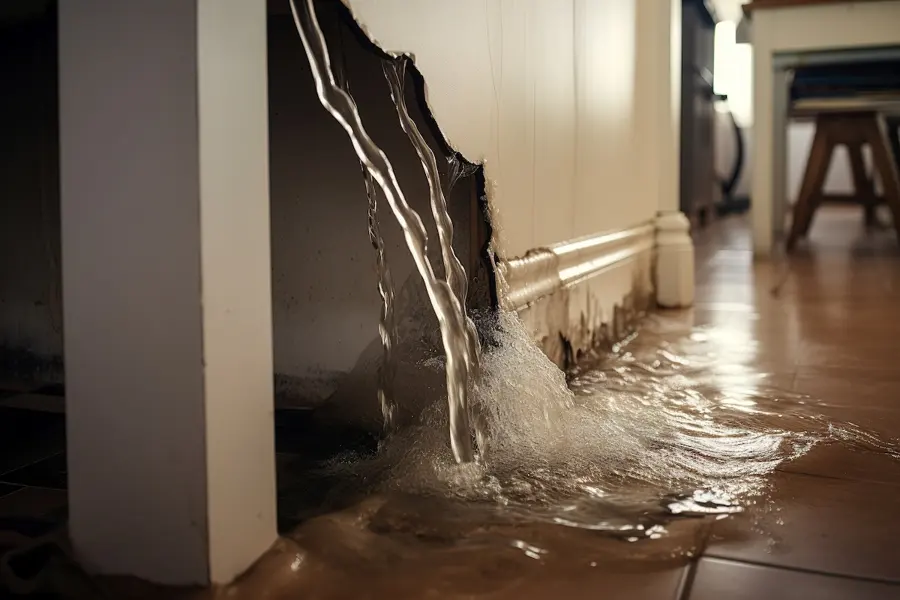
Much of Fairfield sits on expansive clay soil. It shrinks through the long dry summer and swells again with winter rain, and that movement stresses the copper water lines laid in or under the slabs of 1960s to 1980s tract homes. Add decades of water flowing through the pipe and pinhole leaks under the slab are one of the most common water losses in central and east Fairfield.
Signs of a slab leak
- A warm or hot spot on a tile or wood floor, usually from a hot water line.
- Carpet that feels damp with no spill nearby, or a musty smell in one area.
- Laminate or vinyl plank lifting at the seams.
- The sound of running water with every fixture off.
- A water bill that jumps with no change in use, or a water meter that keeps turning.
How slab leak water damage is handled
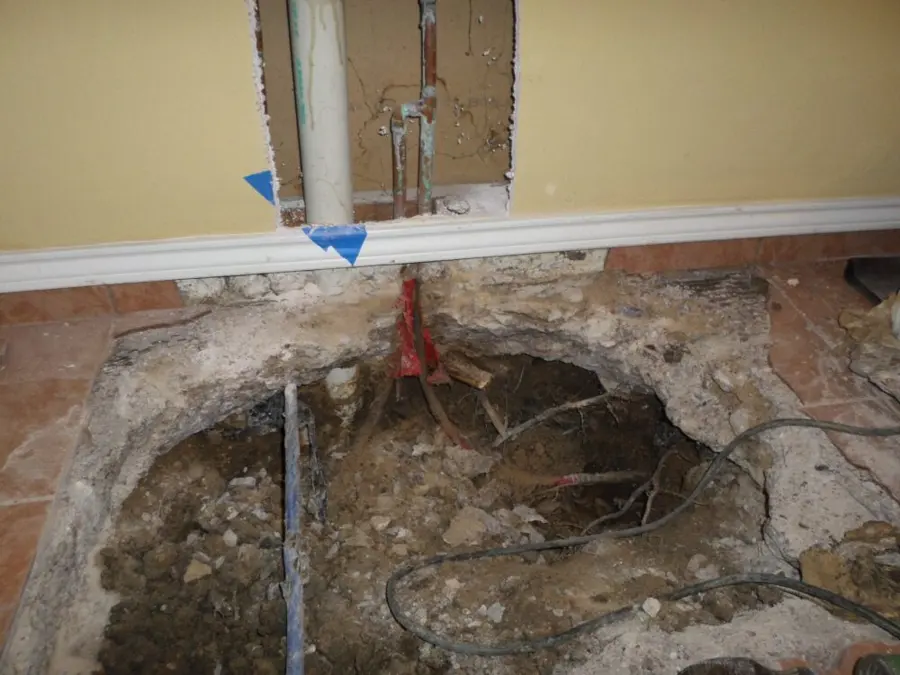
The leak itself is a plumbing repair: a leak detection plumber locates it and either opens the slab to repair the line or reroutes it through the walls or attic. The restoration team handles the water already in the house.
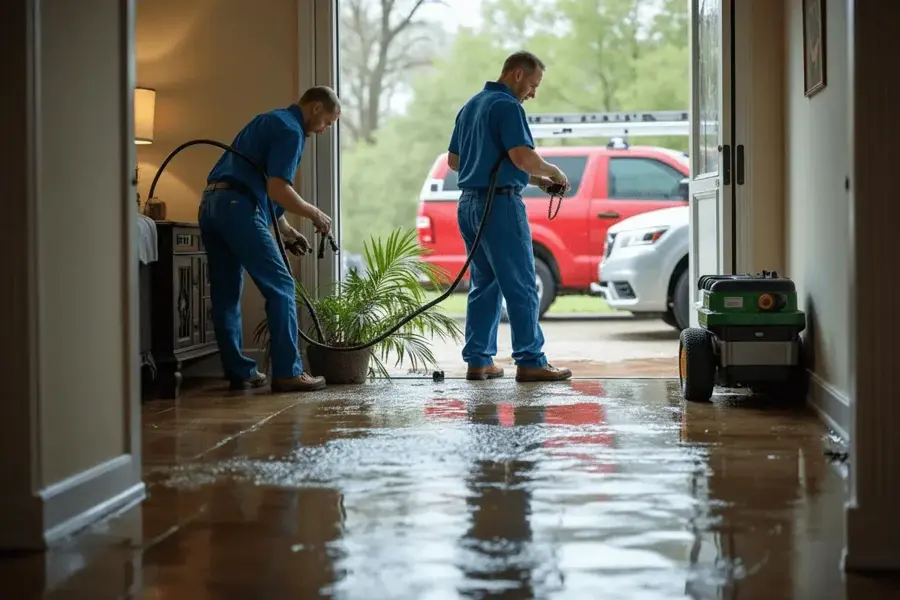
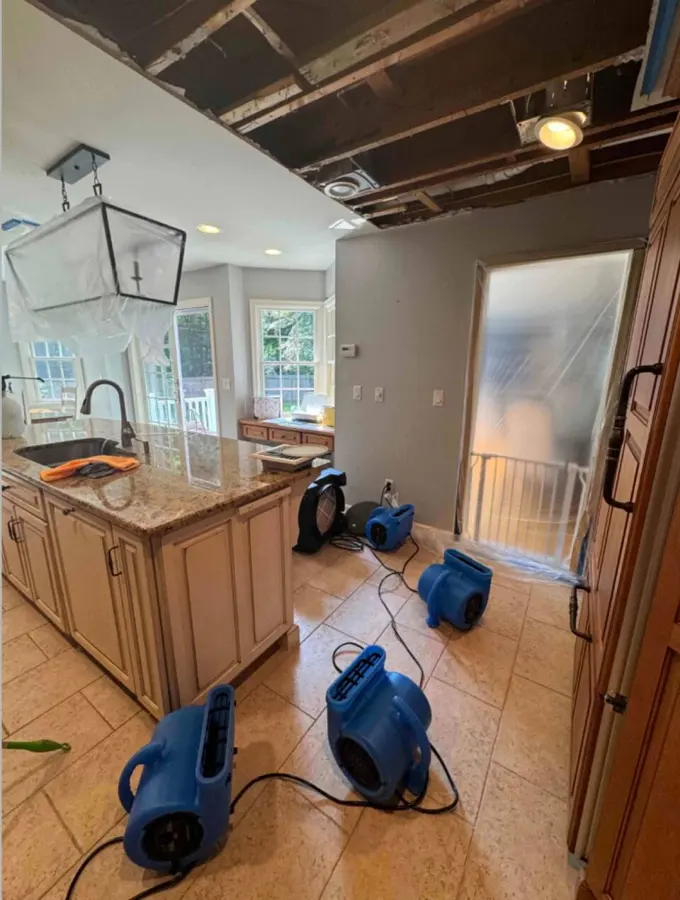
The tech who does the walkthrough maps moisture across the slab and up the walls with pinless meters and thermal imaging. Flooring that traps water against concrete, like laminate, engineered wood or carpet pad, usually comes up so the slab can breathe. Baseboards come off where drywall wicked water. Then air movers and LGR dehumidifiers run, and in stubborn cases specialty drying mats pull water out of the concrete surface.
Why slab drying takes patience
Concrete releases water slowly. A slab soaked for weeks can take longer to dry than the drywall above it. The drying team keeps logging readings and leaves equipment in place until the slab and walls reach the drying goal, because new flooring laid on a wet slab fails again.
The USGS Water Science School explains how water moves through soil and materials, and the EPA WaterSense program shows how to check your meter for hidden leaks.