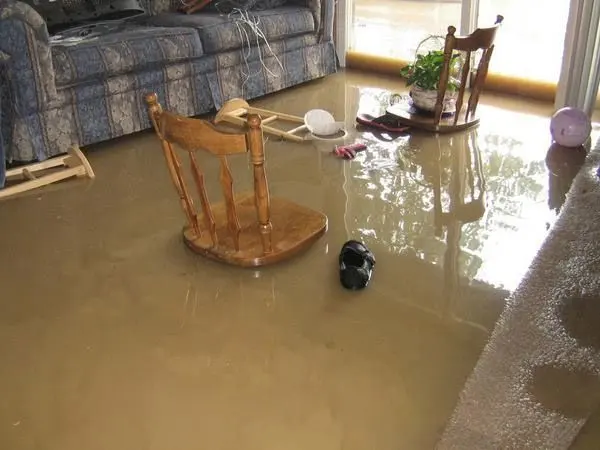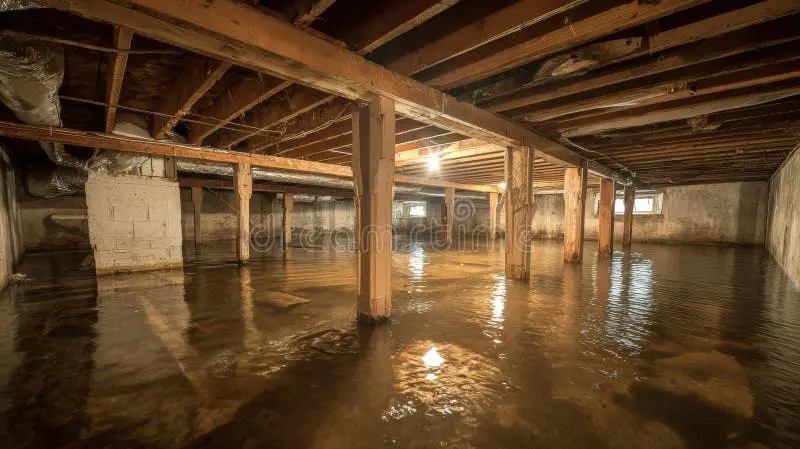
Most newer Fairfield homes sit on a slab, but a lot of the older housing near downtown, Texas Street and the original neighborhoods, plus many rural homes in Suisun Valley, stand on raised foundations over a crawl space. When a supply line leaks under the floor or a storm raises the water table near Suisun Marsh, that space fills quietly and stays wet.
Where crawl space water comes from
- Supply and drain lines that leak under the floor, often unnoticed for weeks.
- Storm runoff from gutters and downspouts that empty against the foundation.
- A shallow water table in south Fairfield and toward the marsh after heavy rain.
- Water heater or washer leaks that drain through the floor.
- Sewer line breaks under the house, which make it a Category 3 cleanup.
How a flooded crawl space gets cleaned and dried
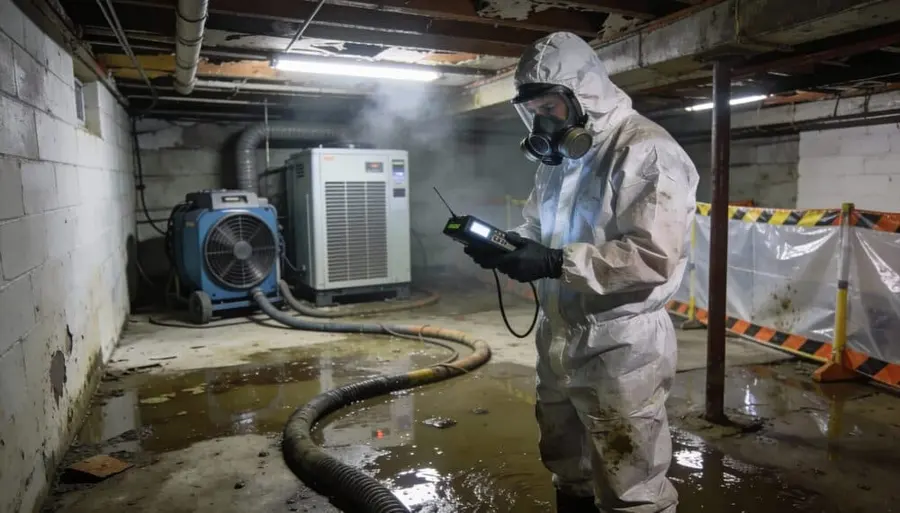
The extraction crew pumps standing water out first, then pulls out soaked fiberglass batts and the old vapor barrier, because both hold water against the wood. The mitigation team checks the sill plates, joists and subfloor with a moisture meter, cleans debris and mud off the soil, and treats the framing with an EPA-registered antimicrobial when the water was contaminated.
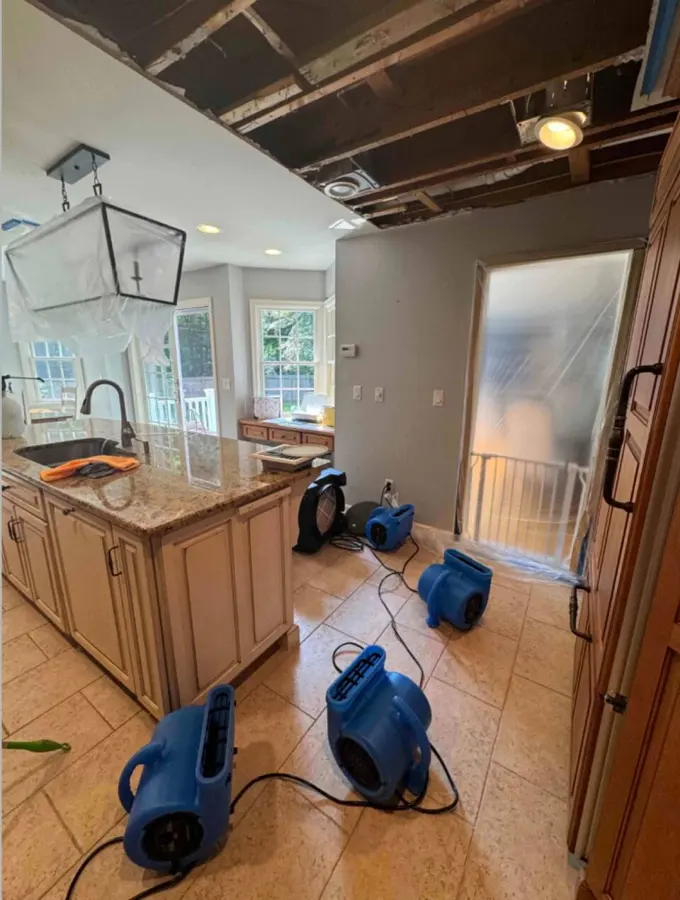
Drying a crawl space is different from drying a room. The drying team seals the vents where needed, runs an LGR dehumidifier inside the space and places air movers along the joists. Readings are taken daily on the framing until it reaches the drying goal, then a new vapor barrier and insulation go back in.
Fixing the cause
If the water came from outside, the cause is usually grading, gutters or a downspout dumping against the foundation. If it came from a pipe, a plumber repairs the line first. Either way, the crawl space only stays dry when the source is handled.
The EPA explains the link between damp crawl spaces and indoor moisture in its brief on moisture and your home. FEMA flood maps show whether a Fairfield lot sits in a mapped flood zone.